VPN for BBC iPlayer
BBC iPlayer has become a go-to destination for fans of quality TV shows, live events, documentaries, and exclusive BBC productions. With apps available across multiple platforms, it’s easy to tune in whether you’re at home or on the move.
In this article, we’ll take a closer look at how iPlayer works with VPN services. Through a series of FAQs, we’ll explain why many viewers use both, what to look for when choosing a provider, and how different VPN features can enhance privacy, security, and streaming stability.
What is BBC iPlayer?
BBC iPlayer is the BBC’s official streaming service that allows viewers in the UK to watch live television, catch up on recently aired shows, and explore a large catalog of on-demand content including dramas, documentaries, news, and children’s programming. It supports a variety of devices — computers, smartphones, tablets, smart TVs, and streaming boxes.
Since the BBC holds rights to show content in specific regions, BBC iPlayer is generally available to users in the UK. Because of licensing arrangements, users outside the UK may have limited or no access. To improve their viewing experience, many users adopt solutions that help maintain privacy and consistency when connecting to BBC iPlayer while traveling or using different networks — all without violating terms of service.
Do I need a BBC account or TV license to use iPlayer?
Yes. To watch shows on BBC iPlayer, you need to sign in with a free BBC account, which can be created using an email address, date of birth, and a UK postcode. The account allows you to keep track of your viewing history, create watchlists, and sync across devices. In addition, a valid UK TV license is required by law if you watch live television or stream BBC channels through iPlayer. The same rule also applies to on-demand programs and box sets available on the platform. When you start watching, iPlayer will typically ask you to confirm that you have a TV license, and although there is no automated verification, it is the viewer’s responsibility to ensure compliance.
Why do I need a VPN for BBC iPlayer?
Many people choose to use a VPN with BBC iPlayer to enjoy a more private, secure, and consistent streaming experience. A VPN adds an extra layer of protection by encrypting your Internet traffic, which helps prevent third parties such as Internet providers or hackers from monitoring what you’re watching. This is especially useful when connecting to public Wi-Fi or shared networks, where your data may otherwise be more exposed.
Another advantage is stability. Internet providers sometimes manage or slow down certain types of traffic, particularly when streaming in HD. With a VPN in place, your connection is less likely to be affected by throttling, which can result in smoother playback on BBC iPlayer.
For frequent travelers, a VPN can also help maintain a reliable connection to familiar services. No matter where you log in from or which network you’re using, it ensures that your connection remains secure and consistent — something that’s important when you want uninterrupted access to your favorite BBC programs.
Why do some VPNs fail to work with iPlayer?
BBC iPlayer uses advanced systems to manage who can watch its content, and these systems are designed to detect unusual patterns in Internet connections. Some VPNs don’t invest in the technology needed to keep up with these checks, which means their servers may be flagged or blocked more quickly. As a result, viewers using those services may encounter error messages or find that streams won’t load.
Another reason is performance. Not all VPNs are designed for high-speed streaming. If a provider doesn’t have optimized servers in the UK or struggles with heavy demand, connections may become slow or unreliable, making iPlayer difficult to use even if the service isn’t blocked outright.
This is why many users prefer well-established providers that actively maintain their networks and focus on offering smooth, consistent streaming with services like BBC iPlayer.
Does VPN slow down BBC iPlayer streaming?
Using a VPN may slightly impact your connection speed because your Internet traffic is routed through an additional server and encrypted for security. For most modern VPNs, this difference is minimal, especially if you choose a provider with high-speed servers optimized for streaming.
In some cases, a reliable VPN can even help maintain smoother playback. A VPN can protect your connection from potential network slowdowns or throttling by ISPs and keep your BBC iPlayer streams more consistent, particularly during peak hours or on shared networks.
The key is to select a VPN known for stable performance and strong streaming support to ensure that any speed impact is barely noticeable while watching your favorite shows.
How to choose the right VPN for BBC iPlayer
When selecting a VPN for BBC iPlayer, it’s important to focus on reliability, speed, and security. A good VPN should offer fast and stable servers, particularly in the UK, to ensure smooth playback and minimal buffering. Look for providers that actively maintain their networks and optimize them for streaming, as this can make a noticeable difference when watching HD or 4K content.
Security and privacy are also essential. A reliable VPN uses strong encryption to protect your data and doesn’t log your activity, helping you maintain a safe connection on both public and private networks. Device compatibility is another key factor — the VPN should work on your computers, smartphones, tablets, smart TVs, and streaming devices so you can enjoy BBC iPlayer wherever you are.
Also, consider the provider’s support and reputation. Reliable customer service can quickly resolve any connectivity issues, and user reviews or independent tests give insight into a VPN’s overall performance. By considering speed, security, and support, you can choose a VPN that provides a smooth, consistent, and secure iPlayer experience.
Which VPN servers are best for BBC iPlayer?
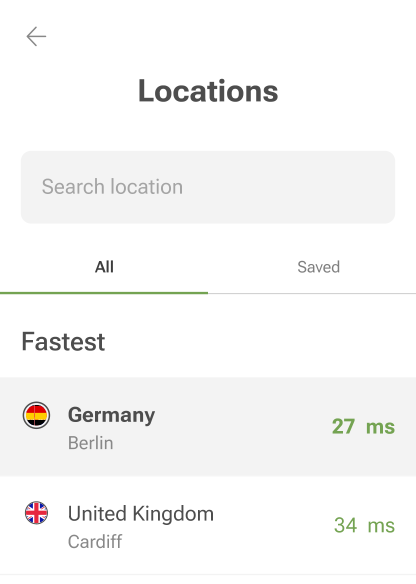
When choosing a VPN for BBC iPlayer, it’s important to prioritize providers with reliable and fast UK server locations.
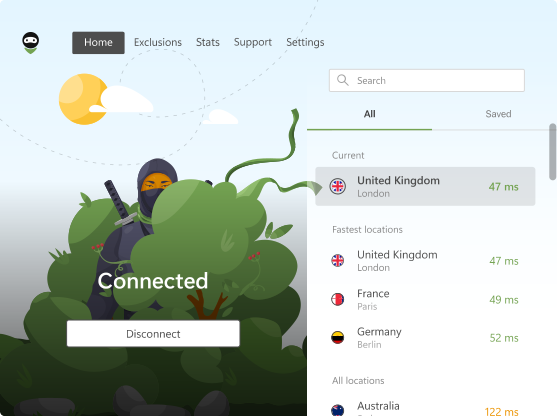
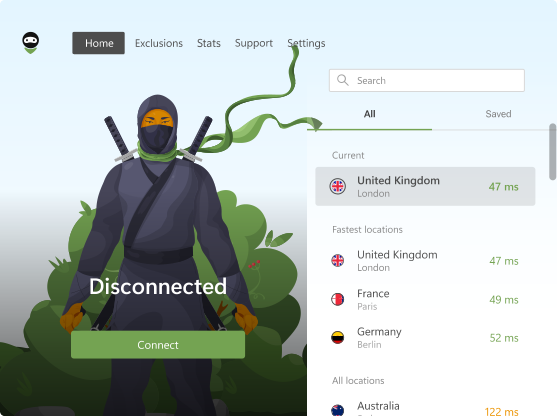
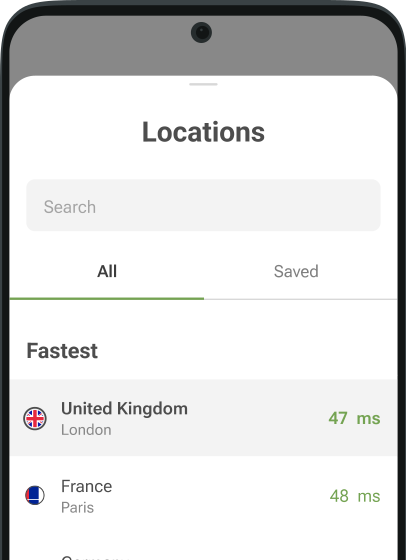
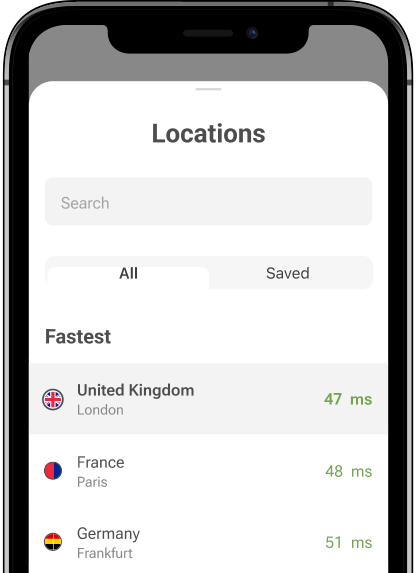
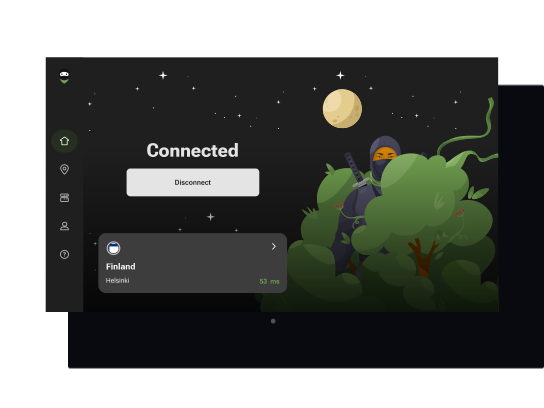
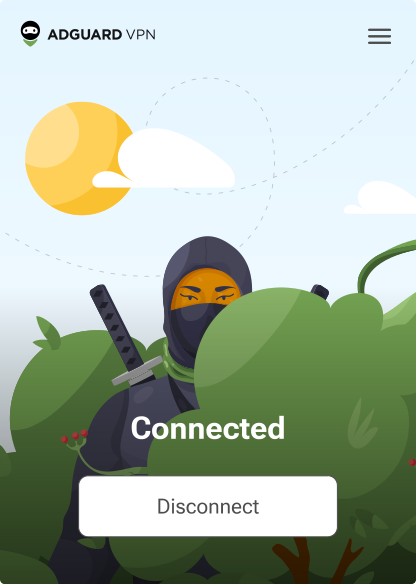
AdGuard VPN is a strong option, offering multiple UK servers and high-speed connections. It provides robust encryption, a strict no-logging policy, and flexible apps for devices including Windows, Mac, Android, iOS, Android TV, and browsers. Its servers are optimized for stability and smooth streaming, making it a solid choice for iPlayer users.
NordVPN is another popular option, known for its large network of UK servers and fast speeds. It includes advanced security features and maintains consistent, reliable performance for streaming services.
ExpressVPN offers a wide range of UK server locations and is praised for its high speed and strong privacy protection. It works well across multiple devices, including smart TVs and streaming sticks, ensuring a smooth iPlayer experience.
Surfshark allows unlimited simultaneous connections, which is useful for households with multiple devices. Its UK servers provide stable connections, and the service includes privacy features like CleanWeb to block trackers and ads.
CyberGhost is beginner-friendly and offers dedicated streaming profiles for BBC iPlayer. Its UK servers are optimized for smooth playback, and it has a no-logs policy alongside strong encryption.
These providers are known for reliable UK servers, stable connections, and privacy-conscious designs, all of which help maintain a consistent and secure BBC iPlayer experience.
Are free VPNs capable of working with BBC iPlayer?
Free VPNs are often limited in terms of server availability, speed, and security features. Because of these limitations, they may struggle to provide a consistently smooth experience with services like BBC iPlayer. Connections may be slower, servers may be crowded, and certain networks may be blocked altogether, resulting in buffering or interruptions while streaming.
Those who want a reliable, stable, and secure experience with BBC iPlayer are generally recommended to invest in a reputable VPN with dedicated UK servers. While free options may work occasionally, they rarely provide the same level of performance and consistency as paid services.